-
 play_arrow
Radio Rehoboth
music_note


Delaware sees high demand on first day of recreational marijuana sales


In quite possibly the highest-anticipated sales event of the year, 12 stores across Delaware were able to open their doors for a new customer base on Friday morning as recreational marijuana sales began for the first time ever.
New customers started forming lines at each of the newly licensed marijuana retail locations as early as 8:30 a.m. Friday morning – all of which also previously sold medical marijuana and were awarded conversion licenses from the state of Delaware to sell to recreational adult-use consumers, as well.
As the day wore on, lines at some locations remained long with just as long wait times for new customers. People 21 and over could now buy marijuana in various forms of flower buds, gummies, other edibles and tinctures.
“Literally, it feels like opening day,” Ashley Graham, the general manager of The Farm’s New Castle store, told the Delaware Business Times. In the first 20 minutes of opening, she checked identifications for at least seven customers outside the store along U.S. Route 13.
The Farm had been operating as a medical dispensary for years and was well-versed in the regulations before the recreational opened in Delaware for anyone over the age of 21. On a typical day, the New Castle store saw 25 to 50 customers with medical marijuana cards.
Graham is expecting to at least double that.
“We’re seeing the same type of volume we do on 4/20,” she said, referencing the informal holiday for marijuana smokers. “It’s just really exciting we’re seeing so many people from the community come by because we’ve had to turn away 100 people a month for not having cards.”
The state of marijuana
In Delaware, cannabis, otherwise known as marijuana, was decriminalized in April 2023, but the state had to work out a regulatory framework to support the incoming industry for 125 new businesses. State officials struggled with some of the necessary aspects of the business, including a federal background check service code that was needed to schedule fingerprinting of operators.
Businesses have also had a tough time finding business locations as jurisdictions worked quickly to pass strict ordinances on where these businesses could open – some continue to struggle with zoning issues.
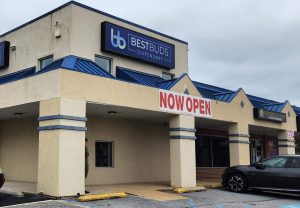
This means that several businesses around the state were not allowed to open recreational retail sales like the others, including Fresh Cannabis Dispensary in Seaford and Milford and Best Buds Dispensary in Wilmington. Best Buds at the Trolley Square location was served with a cease-and-desist order from Wilmington officials, the News Journal reported. There are 30 other lottery winners waiting to open, including those businesses which hold 15 social equity lottery licenses.
Governor Matt Meyer is still having discussions on Senate Bill 75 which would limit the power of local jurisdictions to restrict marijuana establishments in the state – the bill passed both the Senate and the House late in the legislative session and now awaits his signature.
Marijuana Commissioner Joshua Sanderlin, who took on his new role in May, acknowledged the challenges in the recreational market roll-out. He said Delaware has continued to miss out on significant funds from the 15% sales tax revenue which is assessed to recreational marijuana retail sales.
To that end, he said his office is targeting Labor Day as the deadline to have the rest of the first 113 conditional licenses issued.
“Cannabis always has bumps in the road; I’ve never seen a market roll out easily. There’s always issues, especially when you’re rolling back 80 years of prohibition,” Sanderlin told DBT. “It would have been nice to have that [tax revenue] and honestly, that’s part of the reason it was important for me to do this quickly and get this market running.”
High demand
Still, for longtime marijuana advocates and business owners, there was much to celebrate on Friday. Bill Rohrer, who owns The Farm alongside his sister and CEO Jennifer Stark, said Aug. 1 was a long-awaited day for both. It’s a day that increased the possible customer base beyond the 17,000 medical marijuana card holders.
“It’s really neat to be a part of history. It’s exciting,” he told the DBT as he greeted customers that lined up outside of The Farm’s retail store in Felton. “These are all new customers.”
The Farm employs 48 people between all of its operations, including its cultivation and manufacturing site in Kent County and all three stores. One of those stores opened for the first time on Aug. 1 in Frankford.
Collectively, the business has hired additional staff to prepare for the influx of new customers and adjusted some of its processes. Before Aug. 1, customers could call on the phone and quickly pick it up from a location or maybe use one of the kiosks while talking with an employee.
Now, online ordering is possible for all of its customers to help bypass the lines with quick in-store or drive-thru pick-up options after a quick ID check. Rohrer also anticipates adding more team members soon once the company has a better understanding of how recreational adult-use sales will impact the scale of the overall business.
“Typically, patients would just order off their phone and come in to talk, because there

wasn’t as many people here,” Graham said. “But we really had to think creatively about how to work with patient flow as they come in, because it’s still important to us to make sure people know what the product is and what it can do for them.”
Inside The Farm’s New Castle facility, there are vibrantly colored posters framed on the walls, each detailing labels of cannabis strains like what’s made to commemorate a craft beer release.
Racks of branded shirts and sweatshirts were also available for loyal customers for sale. But the most popular products are the cannabis products themselves, including the Berry Swirl strand and salted caramel edibles.
Representatives of Thrive Cannabis Dispensary, which is the retail operation for MariMed, formerly known as First State Compassion, told the DBT that history shows when recreational marijuana is allowed, businesses see their market expand 1.5 to 2.5 times.
While MariMed Chief Communications Officer Howard Schacter declined to offer sales forecasts, he said that Delaware was unique because of its high number of existing medical patients and its booming tourism market.
“We have really high expectations, and [the Delaware] consumer is very savvy and we’ve had medical patients understand deeply and passionately what this plant can do for them,” Schacter said outside Thrive’s Newport store.
That included Joyce McCarthy, who was Thrive’s first customer in Lewes. She bought some items like Bedtime Betties edibles to help her get to sleep easier and combat restless leg syndrome.
“As a hairdresser, I’m on my feet working all day, so this will really help me personally. I’ve talked with my own clients and some people are really excited about this like I am and some just are not and that’s okay. But I’m glad this will be here now to help those of us who need it,” she told DBT shortly after purchasing her items in store.
Others like Angela McDonald, a first-time customer at The Farm in Felton, saw the chance to buy recreational marijuana as a chance to help her family in a tough time. Her mother is transitioning off of the opioid prescriptions she takes for pain management for migraines and cannabis products have helped in the past.
“These products have helped her come off those substances which are extremely detrimental and damaging to the mind and body. She’s suffered from a lot of memory loss, and this has helped her wean from those horrific substances,” she said.
Having previously worked in a pharmacy herself, McDonald said she’s personally seen the negative effects medicines can have on a person’s body compared to marijuana use which offers a natural route to helping them clean their bodies and minds in contrast.
“I’ve been excited about [opening day] ever since it was first announced. . . The availability is absolutely important and it will help people from going illegal routes which we know can be dangerous. This is safe and well tested. It’s really great,” McDonald said.
Getting ready for day one
Across the state, marijuana operators made sure to stockpile enough product to meet the rush of demand and some invested in a second security vault for security purposes. Many, like Thrive, set aside 20% of its product to meet the medical demand without worry that the recreational demand would deplete it.
Fresh Cannabis Dispensary in Newark invested in doubling its cash registers. The company also added a second security desk and reworked the lobby flow so that recreational and medical marijuana customers would have their own dedicated service.
Fresh CEO Kristopher Kiely, who has seen the regulations change from October 2018 until now, said that he received word that recreational sales would start a month out from the Delaware Marijuana Commissioner’s office, which presented a short and challenging timeframe to get ready.
“We had a very aggressive approach to onboarding new personnel; we hired 15 new employees within the last month. In this one place, we were able to successfully get them licensed and badged to work in this industry,” Kiely said, noting that it costs $100 per person to do so.
Industry leaders say that 80% of the revenue in the cannabis industry stems from the flower of the plant, or the bud. With numbers like that, Fresh is already planning to open a second cultivation department to meet rising demand in addition to its current locations, as well as locations in New Jersey.
“I’ve been here since Ground Zero, helping with the build out the construction or launch of this site, and we’re very proud to serve the medical patient community,” he said. “Today marks a huge day for us, and we are super excited to now start accepting all these customers.”
Go to Source:https://delawarebusinesstimes.com/news/marijuana-recreation-sales-start/
Author: Katie Tabeling
Similar posts


Top popular
Matt Damon Discusses Working With Wife Luciana on ‘The Instigators’

Listen to Jane Remover’s New Songs “Flash in the Pan” and “Dream Sequence”
NFL Week 17 highlights: Packers, 49ers, Saints, Steelers win, Cardinals stun Eagles

Demo underway on Sea Esta Motel in Dewey

Watch MexikoDro’s Video for New Song “Marta”